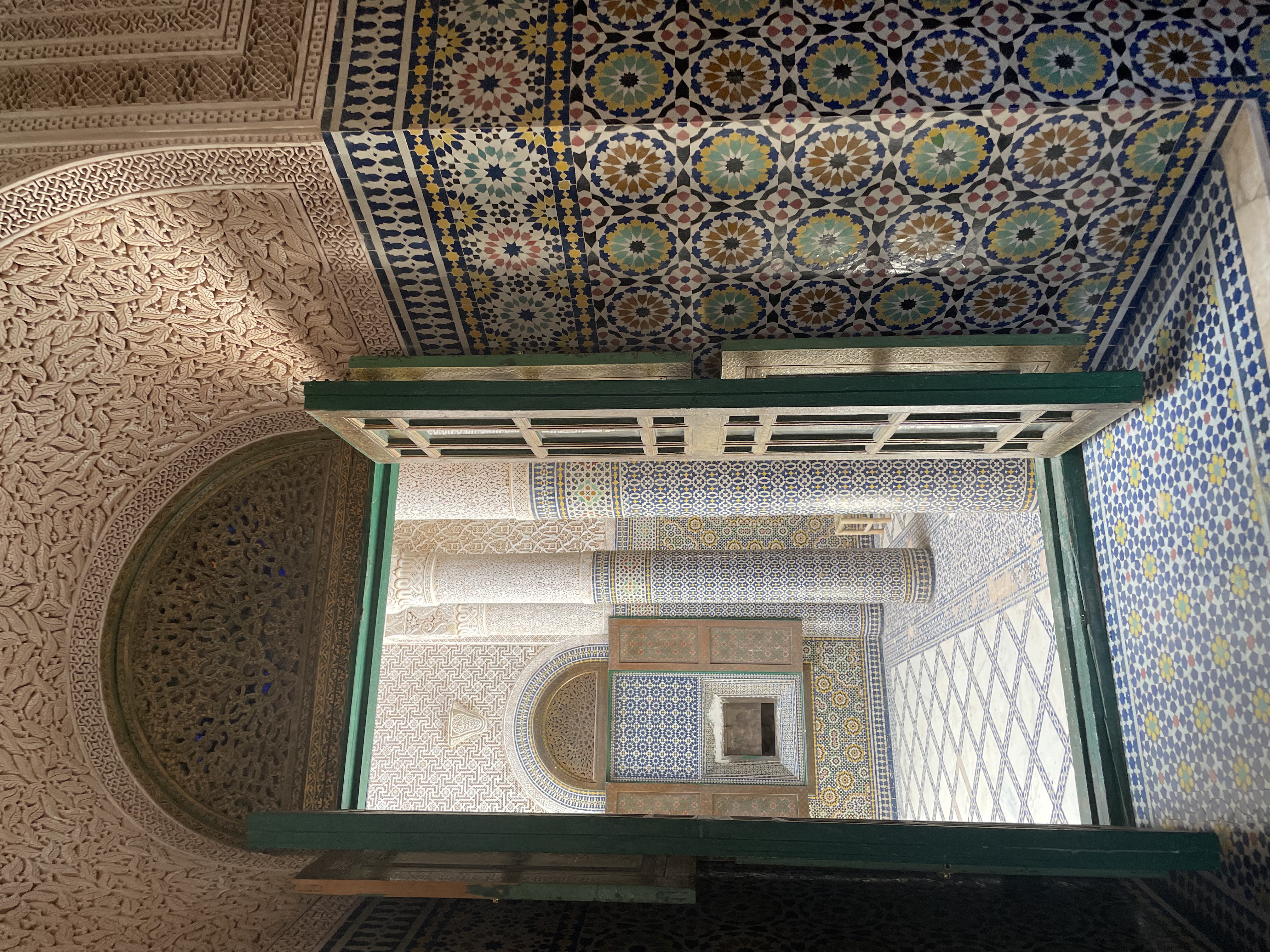
Morocco

Go there.

Research Abroad

Important Details

The Department strongly encourages graduate students to spend a year abroad while they are working on their dissertations. This will most likely fall during their fifth year of study. The purpose of this time abroad may include archival and field research, developing connections with writers, scholars, artists, and other intellectuals, immersive language training, and gaining deeper familiarity with a specific cultural context. 

A principal program to support research in France has long been the Department’s exchange with the Ecole Normale Supérieure (ENS) in Paris. Candidates whose research focuses on literatures from beyond France should seriously explore possibilities to support dissertation research in their geographical area of interest. It is possible for students to draw on Departmental support, if available, for these studies, but this funding is not guaranteed. 

Chief among the criteria according to which students qualify for dissertation research abroad funding are the following: 

  • current status (including seniority, completion of prospectus, etc.) 
  • degree to which they will benefit from immersive research time in a particular context; 
  • the degree to which a their work is likely to benefit from a year abroad; 
  • past academic performance at Yale. 


All students who plan to conduct research abroad—whether this is by way of the ENS exchange or elsewhere—should apply for funding both from outside sources as well as from the Department. 

Interested students should be ready to complete these applications during the fall of the academic year preceding their year abroad, or even earlier. This timing depends on grant application deadlines and will require advance planning and preparation. In other words, candidates should begin to plan for these applications directly after the prospectus is approved. Students must petition the department to approve research abroad and must request funding in writing. 

The basis of Yale’s longstanding exchange with the French system is the Ecole Normale Supérieure, which sends instructors to Yale each year and welcomes four of our students as pensionnaires étrangers. The ENS provides each of our students the following: a room, free of charge, at the Rue d’Ulm location; the access associated with student status (entry to courses, seminars, libraries, etc.); and access to inexpensive meals at the ENS restaurants. 

The ENS does not provide any stipend. Living expenses—which, because of the free room, need not cover rent—must therefore come from other sources: a University Dissertation Fellowship (UDF), an outside fellowship, or a departmental fellowship (if available).

Students whose dissertation is concerned with a geographical area outside of France should explore possibilities for research in their area of interest.  Ideally, a student would spend a full academic year in the country (or countries), but if funds do not permit this, a shorter stay can also be supported. 

These students should consult with their adviser well in advance and seek to make contacts in the relevant places. The student should also seek institutional affiliation—for instance, with a local university or a research institute such as the American Institute for Maghrib Studies (and Les Glycines in Algiers), or the West African Research Association in Dakar—as this will help to facilitate research and collaboration. 

Since a departmental fellowship might not be sufficient to support a full academic year outside of the longstanding ENS exchange, students using departmental fellowships for study in places other than France may decide to limit their time abroad to one semester. If openings are available, they may teach at Yale during the other semester. 

All students planning to conduct research abroad should consult with their adviser(s) and the DGS to determine the most suitable plan. 

Departmental Fellowships

Students who are offered a position in the Department’s exchange with Ecole Normale Supérieure should all apply for outside funding. If they do not secure outside funding, ENS exchange students may choose between: 

  1. using their University Dissertation Fellowship (UDF), which provides the full Yale stipend, to cover expenses during the stay abroad. Students who return to Yale after using their UDF in Paris will need to be supported by teaching during their sixth year of study; this should be their final year, during which they also prepare applications for jobs.
  2. applying for departmental funds—if they are available—according to a timetable established by the DGS. The amount of the departmental fellowship varies from year to year, depending on available funds and the value of the dollar. 

Students who apply for departmental funds to be used for research conducted outside of the traditional ENS exchange must submit a petition, a budget, and a timeline to the DGS. 

Outside Sources of Funding 

Over the past decade, the MacMillan Center has provided  funding for qualified graduate students research abroad. It is possible that the availability of these resources will change from year to year. 

Students seeking dissertation research funding should explore options from MacMillan center and also should apply for funds from outside Yale, which can be both highly prestigious and more generous. 

Students should inform themselves well in advance about fellowships that support dissertation research. You will find links on this page to some of the most obvious sources. Further information about specialized resources may be available from the DGS, from your advisers, and from the Graduate School Fellowship Office, which maintains a database of such sources.

Saint Louis Senegal

Contacts